Rootbound & Resilient

Balloons, Maps, and Magnolias


A mother, a son, and the inheritance of wonder.

Watching sunbeams skip across dew drops on the windshield while our rickety car dipped over uneven roadways was beautiful, but as familiar as Grandma’s kitchen. Midnight drives across the United States and waking up to crevices, deserts, and gullies unseen were part of my childhood. Rolled in between blankets pulled off my bed, with snacks and stacks of clothing toppling into my lap, for a girl who belonged to a family of travelers, it was a walk through customs.

I would rub the blurred vision away, attempting to make sense of where I had landed, piecing together the taste in the air for clues and small details. Sometimes it was my mom behind the wheel; other times it was my grandfather, and I’d say, “Papa? Where are we now?” My sense of direction was nowhere close to understanding whether the dashboard was pointed north toward Maine or south toward the coasts of Florida this time.

Always a grin across their lips and a comment resembling, “Oh good! You’re up! Guess where we’re going?” They were identical, my mother and her father—heads tossed back in laughter at my twisted confusion. I was never in on the joke they’d hatched only hours before. A bug creeping across the mattress, a bite waking them to gather maps without much planning, and suddenly we were on a road trip to some unknown place with an unsuspecting surprise.

A good portion of this is why I have been to almost all fifty states (minus two), lived in other countries, and wandered across much of Europe before I reached my thirties. For so long, I wanted to sit still without being pulled away repeatedly. Not a gift I received until adulthood. Yet it was all so exciting, and even now—facing the North Georgia sunshine, I know leaving home makes the taste of magnolia and iced tea swirl across my tongue even sweeter.

Not knowing where I’d land was enchanting. My childhood of spelunking, wading through waves of rippling tide grass, and watching bison tear across the earth hard enough to leave me gasping has carried forward into holding my son’s hand, taking him to places some children never get to experience.

At ten years old, he’s already seen more states than most adults manage in their lifetime. Sometimes the miraculous discoveries land right in our backyard. When I first laid eyes on the advertisement, I knew Nikolai had to see it. At two hundred and twenty-five miles, it was deemed one of the best long-distance balloon races in America.

While browsing the news, an article about Helen, Georgia’s race to the Atlantic held me captive. On a Wednesday night in May, I booked a hotel, packed our vehicle, and buckled my son into the booster seat. His face was the mirror of a younger me. I slid behind the wheel and grinned at the beautiful confusion etched across his features—stormy blue eyes asking all the questions his lips hadn’t readied themselves to speak.

“Guess where we’re going?” I teased, my voice tangled with laughter.

He didn’t have any guesses. I reached a hand toward the back seat, squeezing his fingers. Just my boy and me, setting off on wild balloon adventures. Snacks spilling into his lap, luggage stacked for a two-day trip—the boy never saw it coming.

That night, when I tucked him into a queen-sized bed with a different view of the mountains we had come to love, I kissed his forehead with a promise: spectacular things come in the morning. No glowing television, only shadows on the walls. Excitement so sharp we barely slept.

Our wake-up alarm sounded, but neither of us moved. Still, before the sun, we managed to greet the day, slipping on our shoes in the dim hush. Nikolai’s legs danced their way to the breakfast buffet, the boy nearly eating asphalt in his hurry to reach the car. Switchback roads curled ahead, fog blushing pink and gold as it cascaded into the valley below. I passed the time by asking what he might take on a long adventure.

“Water, snacks! I would need snacks. My binoculars Daddy bought me, and a picture of Daddy since he’s working. Mommy, I would have to take you.”

His words reached into my chest and clasped my heart. My camera, nestled in the passenger seat, slid against the upholstery, nearly tumbling to the floorboard. I caught it, the weight steady in my hand, and my creative mind bloomed with an image of my son—inside a hot air balloon, racing toward the Atlantic. He couldn’t fly with them, but I have a knack for breathing life into his ambitions. I dog-eared the thought and prepared to catch the ember.

Crowds of visitors followed a nature path into the woods where birds fluttered their morning greetings, until the turf gave way to tipped balloons and fire-breathing contraptions nestled in a woodland hollow. Awe and delight lit my son’s face in colors beyond anything he had seen before. Picnic blankets lined the hill for a front-row view, children clutching hands, bug-bitten limbs marked by the soil in the name of anticipation for liftoff. Families sat cross-legged, speaking reverently over hot cups of coffee and pre-made food—every nationality, every shade of skin—gathering for a tradition passed down simply for the joy of being a witness.

When the first balloon lifted, the crowd erupted in clapping, laughter, and well-wishes that echoed against bark and branches. My hands trembled, damp against the camera, as faces peered down from above. Their beautiful vantage became my living nightmare, making me feel effortlessly small. Yet the substance of dreams is believing impossible things. Success comes not only from attempting something massive, but from daring it, even with the risk of falling. Everything I wanted my son to remember was here, drawn out of the wonder of exploring the world.

I learned as much from this perspective as I hoped to teach him. Seeing through my son’s eyes revealed my mother’s and grandfather’s parenting in a new light. Teaching my boy teaches me in return. At four years old, his memory will be hazy, but mine holds it clear. Exploring wasn’t only about me as a child—it was tasting the old, dressed in new seasonings.

Contentment settled as I folded the blanket over my arm after the last balloon drifted toward a cloud shaped uncannily like a T-Rex. The balloons hung suspended in the air as we walked back to the car. Cobblestone streets, a bobbing river, and a hot cup of tea warmed both our hands. Nikolai stooped to collect stones for his pockets—some of which still turn up in random places around our farm today.

When we pulled into the driveway at home, he bolted to his room and dug through the toy box for his flight jacket, goggles, and pilot’s hat. Crayon maps spread across the floor. The dog was conscripted into service as co-pilot, and together they flew past the chickens, who clucked their disapproval.

By day’s end, long lashes rested on peach skin, bowed lips parted slightly, a pilot’s hat tugged low across his face, and an arm draped over the dog’s belly. This autumn, we’re going to Ireland, where history leaves castles scattered across the countryside. My boy will remember every taste, detail, and scent, carving his name from the United States into the world beyond it. I can’t imagine what he will teach me next.

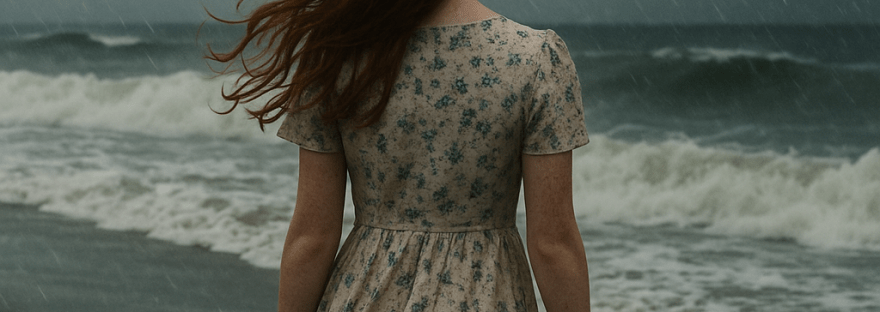
Rootbound & Resilient

The Girl the Sea Didn’t Keep


How I ran on the day I was lost—and the reason I never truly was.

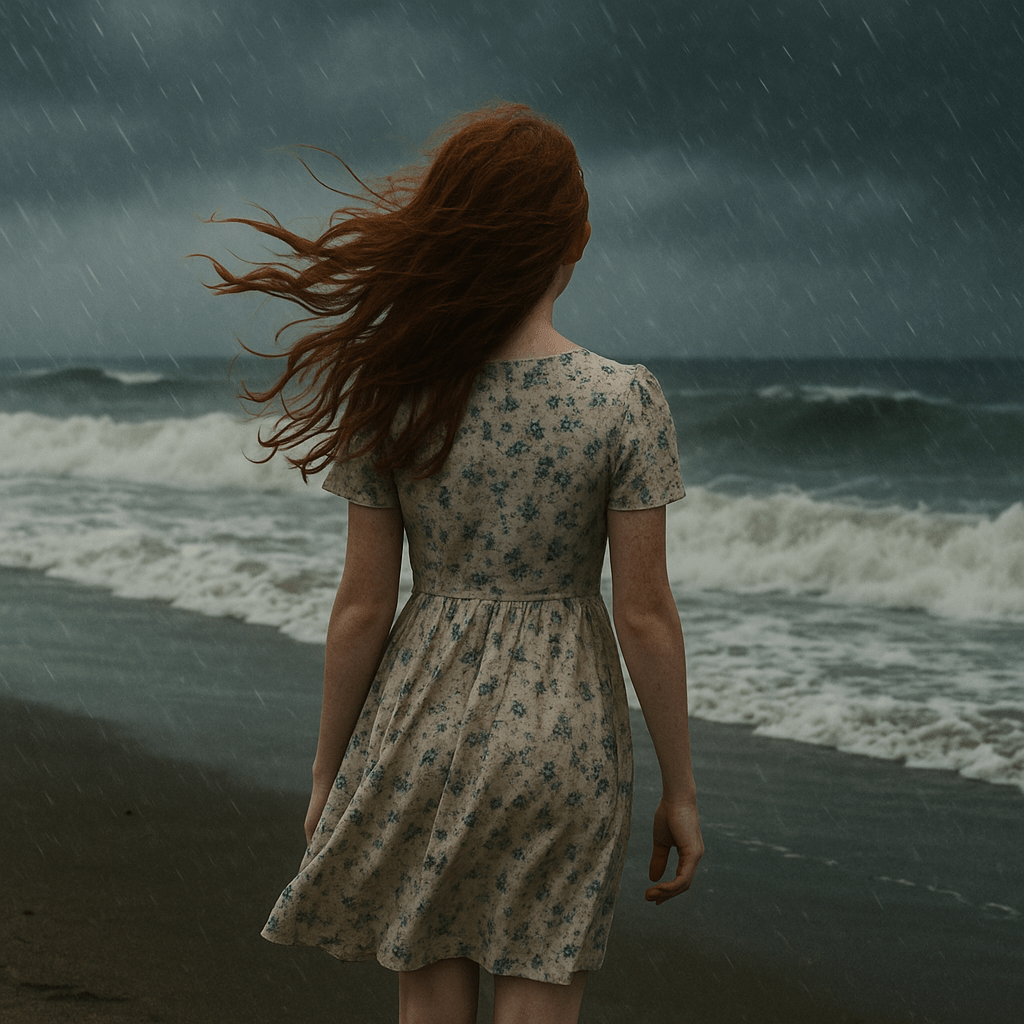
I put my hand over my heart and begged it to stop rattling against my rib cage. Rain hammered my bare skin. The trees were suffocating me, and I was locked within them. If I stopped now, they would become my tomb. Strands of wet red hair clung to my face where salty tears mingled with the sky’s runoff. I was going to die.

Thorns and branches clawed at every inch of me, tearing tiny trenches that bled in beads. Wobbly legs carried me toward a break in the trees where I spotted an empty shoreline. Thunder rolled in the distance. Waves collided with the sand, frothing and swirling with rage. The last time I’d been here, sunlight kissed my cherry cheeks and a pink popsicle melted over my fingertips. My cousins laughed. My mom handed me napkins with a smile. This time, I was alone.

I gagged on sobs and sand, my breath clawing to escape. My mom was probably being told no one could locate me. I pictured her voice breaking as she screamed my name—fists clenched around the silence, unanswered. I imagined her describing the dress I wore. It had been beautiful this morning, delicate cornflower blossoms on white cotton. Now, it wouldn’t be recognizable. I’d used it to wipe away streaks of mud that painted my legs. I raked my hands across the hem, trying to scrape the grime from beneath my nails.

Earlier, I had twirled my way to the campground showers like a princess. But the longer I waited for my cousins to get ready, the more impatient I became. I ventured off toward camp alone—one trail led to another. Had I turned left? Right? Or gone straight? If I could just get higher… maybe I’d see a landmark, something to guide me.

I climbed a dune near the tide-worn slope, knowing full well my mom would be furious. It was against the rules to be out here by myself. But I made an exception—for life or death, rules bend. Even as the sand burned blisters into the soles of my feet, I refused to step into the waves. The climb was brutal. My legs finally gave out, surrendering to the pull of gravity and grit.

A jagged piece of driftwood sliced through my arch, staining the bark crimson. I screamed in frustration, my foot throbbing. I collapsed into the sand, letting the tears fall hot and fierce. Maybe some hiker would find my missing shoe, the one that got sucked into a mud pit. Or the other—the one I threw after failing to retrieve it. Maybe they’d find my body sometime after that.

Somewhere between the tears and the tide, I came unstitched from myself. The tiny speck of cotton and floral print among rolling dunes gave herself permission to cry—but not to quit. When the sun cracked through the clouds, she shaded her eyes with her fingers like a visor. There it was: a boardwalk stretching toward the woods. Relief escaped, wild and breathless. She still didn’t know how to get home, but she might find help.

She sprinted. The muddy dress flared behind her, torn and tangled. When she reached the planks, her stomach knotted tighter. She’d barely eaten breakfast. It was nearing lunchtime. The boardwalk snaked through an eerie marsh of stumps and skeletal limbs, but she forced her mind to stay focused. She laughed when a frog’s tongue shot out to catch a fly—and stuck to his own eyeball instead. He blinked, confused. She cackled harder.

Overhead, a seagull tucked its wings and dove through a seam in the clouds. It danced with the breeze and pierced the sky like a dart.

I bet he could see the way home… I wish I had wings like his.

I turned a corner—and froze. I wasn’t alone anymore. A man appeared on the path. Relief bloomed, then wilted. Something in his posture unnerved me. He tried to smile, but his pale eyes looked sharp.

“Where’s your mom?” he asked.

“I’m not sure yet,” I replied. Scrambling for words I could hurl like stones.

His body crept over mine, a position making my hair prickle.

“Catching up,” I said, pointing behind me.

My gut told me to run. So I did.

I ran until my chest felt full of splinters. I remembered how his eyes had lit up when he thought I was alone—and how they darkened when I hinted I wasn’t. That image gave me a second wind. I ran harder.

The boardwalk ended at a three-way dirt fork in the road, and no forestry signs to guide my next move. My stomach howled. Breakfast had been missed. The sky had dulled again, the path even more challenging to follow. I was out of energy. Hope was cracking under the weight of exhaustion.

Then I heard it. The roar of an engine.

A park ranger skidded to a stop on a four-wheeler. Relief poured over his face as he grabbed his walkie-talkie.

“I found her! I found her! Tell her mom I’m bringing her back!”

The static buzzed like a lifeline.

Through tears, I explained about the lost shoes, the beach, the mud. He patched up my feet while I talked. As he placed a sunshine-yellow sticker over the cut, he was the one who winced.

“The beach was cleared,” he said gently. “A boy your age drowned. Pulled under by the current. We tried to find him, but it was too late.”

He paused.

“When your mom heard the rumor that a child had washed ashore, she thought it might’ve been you. She was praying it wasn’t… even as she ran through camp trying to find you. We didn’t stop looking.

He scooted forward and I climbed on behind him, arms wrapped around his waist. My legs dangled off the side, my fingers clenched tight. I rested my head on his back as we roared through the trees.
My hair waved goodbye to the marsh. The dunes. And the girl who wasn’t left behind with the ghosts of the sea.

*You may remember this one, you may not. As I improve my skills, I go over my work to see if my voice is stronger *

Rootbound & Resilient

The Night I Caught Fire

Skin to stars, fear to freedom—the night I stopped asking permission and leapt anyway.

I sat on the dock with my feet dangling over the edge. Wisps of red hair, slick with sweat, clung to my forehead and neck like they’d melted there. I tried to pry them away, piling the mass of flames on top of my head in desperation to cool down, but they tumbled right back again. Sticky and stifling, the humidity made it all feel unbearable.

Maybe that’s why the idea came—born of a wicked Tennessee heat wave and the war-tangled grief I’d been carrying for months.

Fear constantly hummed in the background, like static ruining a good song on the radio. But somehow, the day had dulled it. The volume turned low enough to let in something quieter: a breeze through the pine needles, like church bells in the woods. The worst things were still there, tucked in a corner of my mind, waiting for me to wear them again like a second skin.
The fear that my husband might not make it home.
The fear of deep, dark water, even as my legs hovered just above the ripples.

I’d never really learned to swim—more flailing than floating. Graceful swan dives? Not a chance. And I never did shake the locker-room shame that clung to me whenever I had to undress in front of other girls.

Hush.
Hush.
Hush.

The waves whispered as I swirled my toes in the murky darkness at the edge of the rotting dock. If I was so afraid, why did I feel drawn closer? Why did danger call to me like an invitation?

The stars danced across the water like fireflies, even as summer began to fade. The moon shattered into shards of glass, and three of my favorite girlfriends gathered beside me. We laughed, still sticky from a day of trail rides, buttered popcorn, and watermelon for dinner. We smelled like manure and bug spray, and I was happy.

But even in that joy, I knew—somewhere in Afghanistan, my husband might be dodging mortars.

Every morning I woke to an empty bed was a fresh ache. I thought about death often, in the quiet moments between living. I needed something to rattle my bones. A shock to the system. A reason to breathe deeper.

He was always the one to pull me out of my comfort zone.
I wasn’t the risk-taker.

I’d never been drunk (still haven’t). Never touched drugs. Never put a cigarette to my lips. I was proud of that (still am), but I wanted to know what freedom felt like. Real freedom—the kind that lives beyond the anxiety that chains you to the safe thing, the right thing, the expected thing.

To my church friends, I was the “bad girl” from Chicago—too many jokes, too much sarcasm.
To my non-Christian friends, I was the tight-laced killjoy quoting Bible verses at the party.

Those pieces made up who I was, but none of them felt accepted.

There was another version of me—one most people never saw. Sure, I could be uptight, wildly critical. But I could also smack my bestie’s booty with a riding whip in a kink store. Play Marco Polo inside Walmart clothing racks. People-watch and laugh until my ribs cracked.

What I really wanted was freedom—the kind that came with letting go of all the versions of me that other people had decided were true. I needed liberation from the prison I’d built inside myself.

I stared at the water, dark and waiting, and I couldn’t shake the thought of how good it might feel to be fully submerged. To quench the heat. To stop spiraling through worst-case scenarios and just see what might go right.

The frogs croaked. The crickets joined. The trees pulsed with sound.
We talked. We cried over things we’d never said aloud.
We howled over memories long passed.

Link by link, the night unchained me.

It was like finding the key to a lock I didn’t know had been closed.
A voice inside me whispered: I can do this.

“We should go swimming.”
…Did I say that out loud?

“We don’t have enough swimsuits,” my blonde friend said, pouting.

“Do we really need them?” I asked, pulse racing.

“You mean like… skinny dipping?” my brunette friend giggled.

“Why not?” I said.

How deep was the lake again?
Could my feet touch the bottom?
Doubtful.
Fish? Probably.
Snakes? Most definitely.

Too late to take it back. A pact had been made.

We left our clothes in crumpled heaps on the landing. I slipped the useless hair tie from my tresses and curled my toes around the edge of the pier. My stomach flipped. Goosebumps prickled down my spine, but I was still—my bare back facing the woods, my eyes locked on the splintered sky beneath me.

I inhaled deep.
Held it.
Squeezed my eyes shut—

—and squealed before launching myself into the Milky Way.

Twisted red locks fanned around me like wildfire, and my heart paused mid-beat. Everything I’d been afraid of was left behind with the heap of laundry on the dock. For one sacred moment—

I was the brave one.
I could do anything I set my mind to.
And I could do it without someone holding my hand.

The lake kissed my skin with icy lips. The shock stole my breath.

I was swimming naked in a bottomless lake.
I was doing the unthinkable.
I was facing every single fear I’d ever known—and screaming, You can leave now.

My soul had never tasted such joy…

…right up until my foot touched something slimy.

My pale legs flailed beneath me, kicking water in every direction. I imagined I looked like a gladiator, a goddess reborn.

To anyone watching, I probably looked like a panicked fish slapping the surface, begging to be rescued.
But I didn’t care.

A whippoorwill cried out from the shadows—like my soul reaching for light.

I was washed in pride.
A caged bird, no longer.

Facing the unthinkable in the deep dark night.

*If this sounds familiar, it’s a rewrite. Proof I’ve grown quite a lot since I’ve been away without Wifi.*

Rootbound & Resilient

What We Built in the Rubble


Some foundations crack. Ours grew wildflowers.

I didn’t care for the musty smell lingering in the air, almost as if someone’s grandma was haunting the place. What I fell in love with was the old knotted and stained hardwood floors groaning beneath the soles of my sneakers. The dust shimmering in the glow of a wall devoted to windows and the sunlight streaking through them. It had farmhouse charm long before that look became chic.

Have you ever seen something and thought to yourself, will there ever be anything as beautiful as this? The porch was perfect, not in a hugged-by-good-bones kinda way, more along the lines of being kissed by hints of floral in your lemonade. Big enough for two chairs, a little porch table, and some china for my morning tea. Perfect for spooky Halloween pumpkins on the steps and autumn leaf drapery woven through the black spindles on the balcony. And sure, the project was an undertaking, yet sometimes love makes the young do irrational things.

Our family arrived with stacks of cardboard boxes filled with childhood memories. Rob’s mom unpacked some drama and tried to dress our only bathroom in full Scooby-Doo attire, like she was sending us off to cartoon kindergarten. Every time I opened the door, I’d remove a bobblehead soap dispenser and that creepy shower curtain I hated. Then, later, I’d walk back in and feel like I’d stumbled into a Scooby-Doo meets Psycho crossover episode. I dedicated time to outwit her, snatching the items and smugly dropping them into the dumpster. Only to find her later, rummaging through it like she was filming a trash-to-treasure documentary, reigniting a war that always ended in petty revenge.

Meanwhile, my Papa would clap me on the back and wander the rooms, saying, “You’ve done good for yourself, little redhead. Real good.” I’d smile because with his words, the stress of the day melted, and all was set right again.

The orange shag carpet looked like a disco fever dream from the ’70s. Faux wood paneling ran halfway up the walls within the dining room, severely outdated but secretly awaiting a comeback. The fireplace mantel was perfect for hanging stockings, and I already knew where the tree would go long before Christmas came.

It was while sitting in hard plastic chairs surrounded by financial advisors and realtors that I knew the memories we would make from that moment on would change us. Cold metallic keys were slipped into our hands where a world of warmth awaited us. All the door knobs inside were painted over by a rushed seller. The windows wouldn’t open because they were sealed shut. But hope stretched on forever like a ribbon of asphalt and threaded yellow lines. Leading a winding road towards love and adventure. It wasn’t our first dance on a kitchen floor made of linoleum, but it was the first stage we called ours.

Most of our meals consisted of microwavable noodles and whatever we could find in the clearance section of the produce aisle. My soldier was in a low-ranking, bottom-of-the-food-chain phase, making the pay minimal. Physical training exercises were an excuse we made to hold hands in the car during the early hours of the morning, all to steal a little alone time back from the Army. Sweaty field-issued boots were dramatically unlaced and thrown against the wall by the door. Camouflage after-work attire made a pathway from entrance to shower like a cringe-worthy gym locker room.

I would help my husband wash and pack his rucksack before weather training missions. Or stand in the shadows cheering him on during paintball tournaments. Scrubbing past blue and yellow splattered paint stains, fetching the frozen peas to calm the welts that meant to teach far more about war than losing a game ever would.

When I wasn’t dealing with hospital or doctor visits, we were racing downtown with my heels on his motorcycle’s foot pegs and his hand reaching to grasp my knee to help us forget for a while. A rule was enforced (mostly by me) where date nights became mandatory. Relying on an over-sized change jar for coffee and tea beverages or hurling sofa cushions trying to find a spare quarter for dinner. If we remembered where we put our pennies, we could catch a movie. If not, we ended up sharing the kiddie swings at the park with our home-made picnic lunchables. Both usually ended in a fit of laughter, and the two of us dodging some shifty looking character on a park bench.

The house saw a fair share of arguments, too. Brutal tongue lashings. Late nights of restlessness and worried thoughts. Concerned moments if we’d even survive the marriage we built. Hurled picture frames and shattered hearts. Suitcases packed in silence. Vows made in a flurry of anger to never return.

The house became a silent witness to near-death experiences. Watching a soldier as he carefully washed the vomit out of his wife’s hair. Battling an illness together that they couldn’t identify, while he wondered if he could save her life.

I stood inside a flight hanger surrounded by thousands of other women. Tears, pouring like a busted pipe. Afghanistan—clearly labeled on the map but not wanting to surrender my husband to the aircraft. Wondering how I could fight through what came next, how I could be brave for him, and how I could hold the pieces together for both of us. I feared I’d never feel the strength of his love again.

For a time, the house sat empty. Quiet. Vacant. Overcome with grief as we sorted through PTSD, piles of health problems, and military paperwork. The stoic oak in the front yard that was my favorite was overgrown with weeds from the landscaper’s neglect. Pouring funds into our fixer-upper meant struggling with a bank account that was already in the negative from life events. One mess leading to the next while trying to tether ourselves to one another. For a while, we were wrapped up like a bow. Maybe dilapidated but we felt whole and we were working on it.

I was sitting with my legs twisted underneath me on the sofa in the living room. Staring at the fireplace and the painting of us hanging above the mantel. Dinner was simmering on the stove, the scent drifting down the hall, when Rob strode through the door holding a bouquet of wildflowers. I knew in my heart we couldn’t afford them.

“I discovered a field of daisies while I was out training with the guys the other day. I made a mental note to find my way back to them so I could bring some to you.”

The image of him in my head, standing on the side of a road somewhere in his uniform with cars passing by, picking armloads of blossoms by hand because we couldn’t afford to buy a single stem. A tidal wave of floral softness meets his strength and endurance. It became our marriage’s code of survival: to burn the white flag of surrender, meet each other on our own level, and to keep fighting like our love couldn’t survive unless we did it together.

We couldn’t keep our house. Five rounds of layoffs after Rob became a contractor conflicted with our desperate need for financial security. Served with a side of panic and a main course named health insurance. We bought the house before the market crashed. We couldn’t sell it. We tried renting it, but fixing things was nearly impossible. We lived in Germany for a while and moved back to the States. Yet we couldn’t live at home where the work didn’t exist and it left us drowning beneath two mortgages.

Seven years in the house we loved. Game nights, church events, marriage counseling, and learning what it takes to fight for what we have. Yelling over how to fold the towels correctly and which way the toilet paper roll faces. All for the ribbon of asphalt to bring us down a red clay dead-end. To the farm that isn’t being held by a bank note.

Bankruptcy and foreclosure took our house but memories and travel let us visit. Pointing from a foggy car window to tell our son about the life that existed before him. “See there? That’s where we sat on and watched the storms roll in.” The beautiful haven where we had a room designated as maybe for maternity. While we waited to see if we could survive one more ER exam room or another battle with mental health. Meanwhile, life took us to unforgettable places but everything changes when you leave.

The beautiful house on the hill was overtaken by someone who seemed to need more help than they ever received. My heart ached, but the house was old—and it had probably survived worse. The next time we came for a visit, the woods had been plowed and mulched. Where deer once felt safe enough to leap over our backyard fence was now a sprawling view of smog-infested highways and shopping centers you could’ve thrown a rock at.

Visit three had put on a display of devastation, gripped by a tornado touchdown. Many streets and structures had been leveled, but our gorgeous white house showed impeccable condition. The storm left the coffee shop standing, which led to a sip of something hot to comfort our spirits. We waved at the theater, drove by the park, and sat in our favorite booth for dinner from all those nights ago when we were able to pull enough money together.

While sprawled out on a hotel bed, waiting for Rob to return, he called me to explain he’d be late getting back. His company sent him to pick up a helicopter part, hours from where we were staying, but only three miles from where we once lived. I asked him to send a picture of our past in the present. He hesitated. The sound of a ping came through my phone’s speaker. The mailbox stood as proud and erect as it had ever been. The tree I loved still shading the places where Rob tucked me into the grass to plant a thousand tiny kisses into the crevice of my neck. But our beautiful house—leveled to nothing more than an empty lot.

Our house was being replaced by apartment complexes and heartbreak. To somebody else, it was unused potential. For us, it had been the foundation where we strengthened the bones of our marriage. I sobbed, feeling robbed and gutted. Rob was lost for words, the phone dangling in his hands as he apologized as if it was his fault.

He tried to bring me our mailbox, yet it was rooted and bolted in place. Only a couple of bricks found discarded as he searched for what remained, then he tucked them into the front seat of the sedan. A bouquet of memories. There is nothing left to visit. Our life from Tennessee is now scattered between the stepping stones of our farm in Georgia. The ones that lead to our front porch. The ones that guide us home. Where the land far outweighs the square footage. Where blooms fill the landscape, and the mountains and the woodlands embrace us. Our lives—transplanted.